
From San Juan del Sur to Granada
Once again, we called on Claudio, our now-trusted driver, who came from Managua to pick us up. It was still pouring rain when we left San Juan del Sur, and along the way to Granada we even encountered flash floods. After about two hours, we arrived safely at our next destination: Boutique Hotel Secret Garden Granada Nicaragua.
This property was a hidden gem — from the outside, you’d never guess its size. Owned by a Hungarian couple with five children and run primarily by locals, the boutique hotel offers clean rooms, a pool with a relaxation space, and a rooftop terrace. Breakfast was delicious, and for the price and location, it’s a great option if you want a quiet sanctuary on the edge of Granada’s old town.
Why Visit Granada, Nicaragua?

Founded in 1524 by Spanish conquistador Francisco Hernández de Córdoba, Granada is one of the oldest colonial cities in the Americas. Often called the “Paris of Central America,” it’s famous for its colorful colonial architecture, cobblestone streets, and its strategic location on Lake Nicaragua (Lago Cocibolca).
Granada attracts more visitors than any other city in Nicaragua. Compared to León, which has a strong revolutionary spirit and university-town feel, Granada is more polished, tourist-friendly, and vibrant — with a large expat community, international cafés, and boutique hotels.
Top Things to Do in Granada, Nicaragua
1. Visit the Granada Market
The Mercado Municipal de Granada, located near Calle Atravesada, is a bustling and colorful market where locals shop for daily essentials. Stalls overflow with eggs, fresh produce, spices, meats, rice, beans, and street food. Going with a guide helped us understand the variety of products — from unusual tropical fruits to fresh fish brought in from Lake Nicaragua. It’s one of the best ways to experience everyday life in Granada.
2. Explore Granada’s Churches
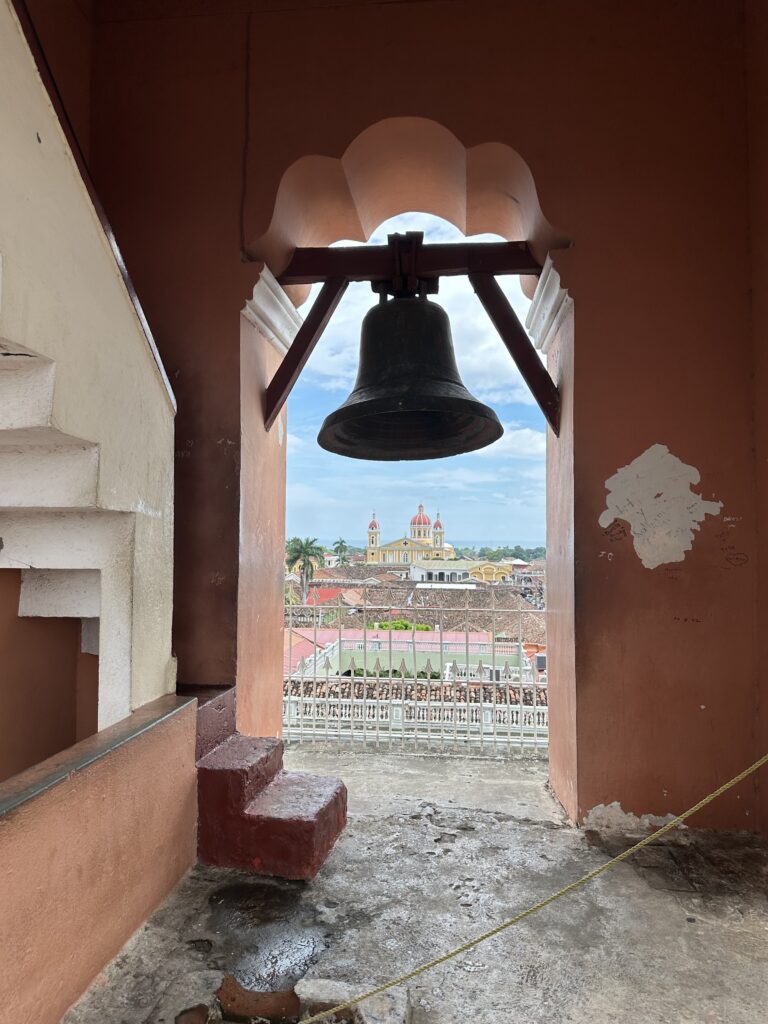
- Iglesia de la Merced: Originally built in 1539, destroyed by pirate attacks, and later rebuilt, this church is one of the city’s most historic landmarks. Climb the narrow and winding stairs to the bell tower for panoramic views of Granada’s red-tiled roofs, Lake Nicaragua, and Mombacho Volcano in the distance.
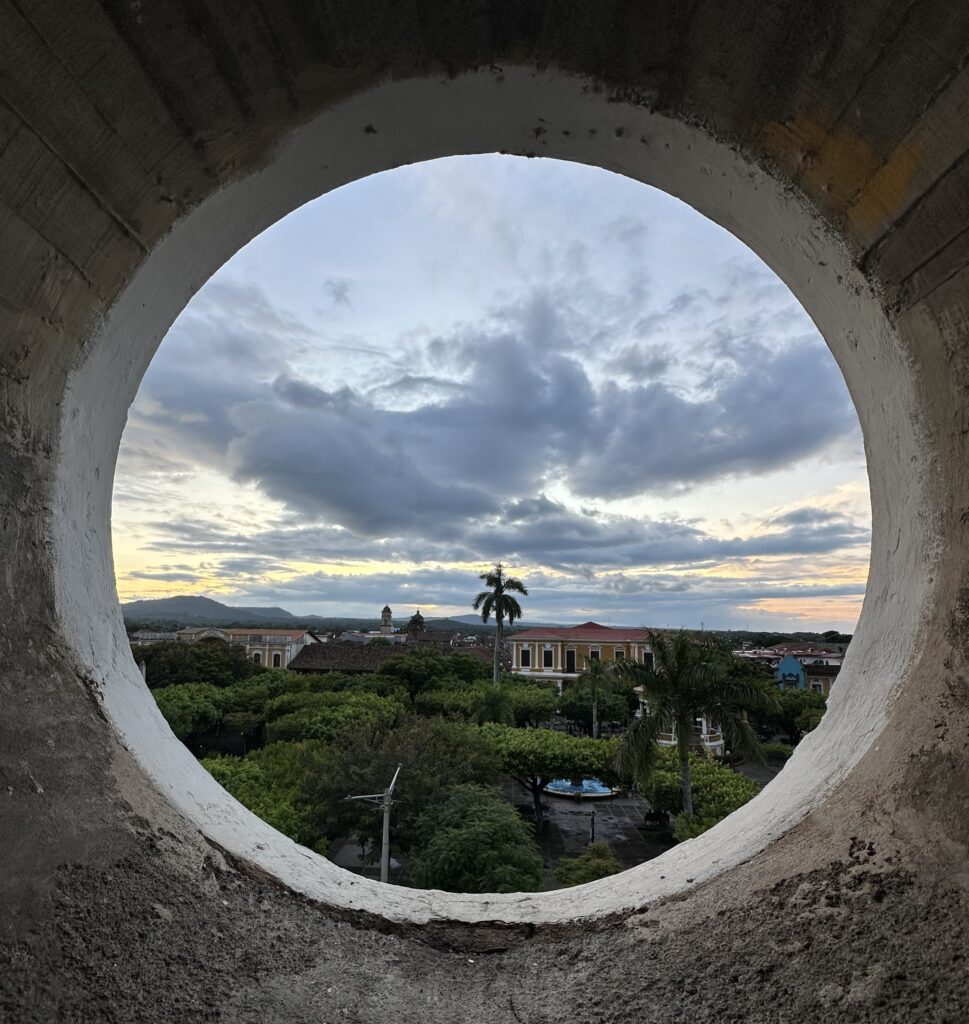
- Catedral de Granada (Cathedral of Our Lady of the Assumption): The bright yellow Granada Cathedral on Parque Central is perhaps the city’s most iconic landmark. Initially constructed in 1583, the cathedral has been destroyed and rebuilt several times, with its current neoclassical design dating to the early 1900s. Its domes and façade make it one of the most photographed churches in Nicaragua.
3. Try Traditional Nicaraguan Food in Granada

Granada is home to vigorón, a dish said to have originated here in the early 20th century. It’s served on a banana leaf with yuca, cabbage salad, pork, and crunchy pork rinds (chicharrón). You’ll find it at Parque Central, where vendors serve it up fresh.

Of course, no trip to Nicaragua is complete without gallo pinto, the national rice-and-beans dish. In Granada, it also comes with fried cheese (queso frito), eggs, and sweet plantains (maduros). Pair your meal with Nicaraguan coffee in the morning or afternoon, accompanied by Victoria Beer, Nicaragua’s oldest brand, founded in 1926, or the lighter Toña, both beloved national favorites.

4. Stroll Calle La Calzada
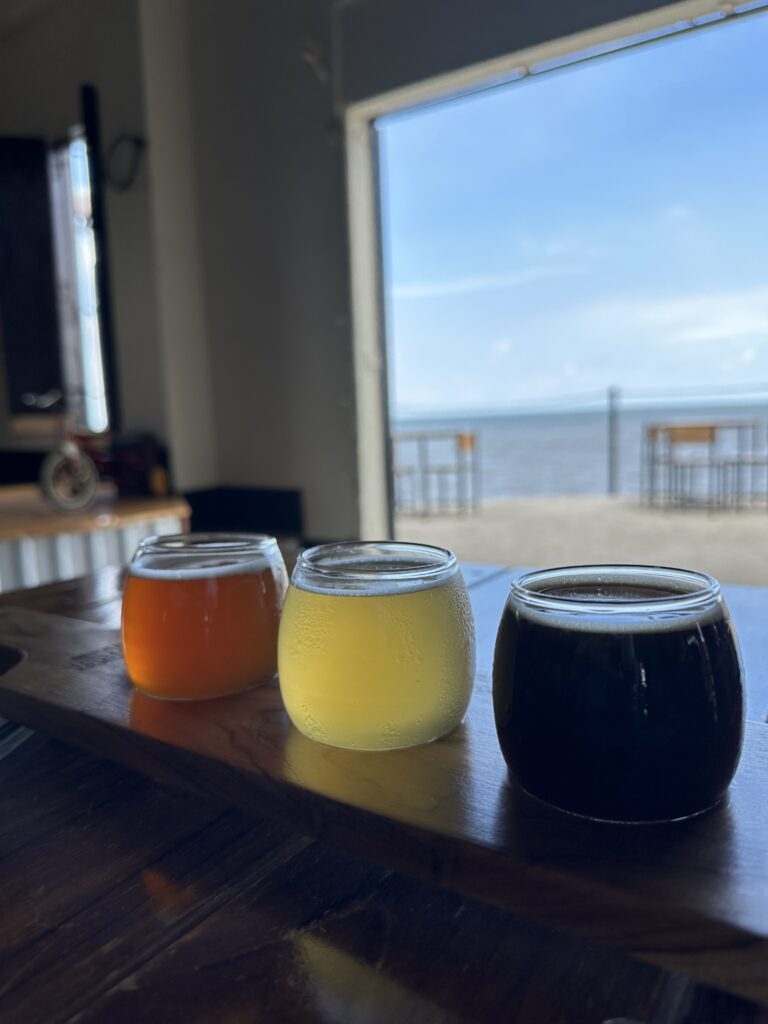
Calle La Calzada is Granada’s most famous street, running from Parque Central down to the shores of Lake Nicaragua. It’s lined with colorful colonial buildings, restaurants, cafés, and shops. At night, the street comes alive with music, open-air dining, and craft beer bars popular with both locals and expats.
5. Take a Boat Trip on Lake Nicaragua
At the end of Calle La Calzada lies the shore of Lake Nicaragua, the largest freshwater lake in Central America. From here, you can take a boat tour of Las Isletas, a group of tiny islands created by volcanic eruptions thousands of years ago. Many are home to local fishermen, while others host private villas and eco-lodges.
Granada vs. León: Two Colonial Cities, Two Different Stories
Both Granada and León, Nicaragua are must-visits, but they offer very different experiences. León is intellectual, gritty, and revolutionary, with powerful murals and fewer tourists. Granada, in contrast, is more polished, colorful, and tourist-friendly, with lively restaurants, boutique hotels, and an international crowd. Visiting both gives you a well-rounded understanding of Nicaragua’s colonial past and present-day culture.
Final Thoughts on Granada, Nicaragua
Even in the rain, Granada captivated me with its architecture, history, and food. Compared to neighboring Costa Rica or Panama, Nicaragua is far more affordable, and Granada in particular offers a blend of authenticity and tourist comfort.
If you want to experience Nicaragua’s colonial charm, try local dishes like vigorón and gallo pinto, sip Nicaraguan coffee, and stroll through colorful streets lined with centuries of history — Granada, Nicaragua should be at the top of your travel list.


Leave a Reply
You must be logged in to post a comment.