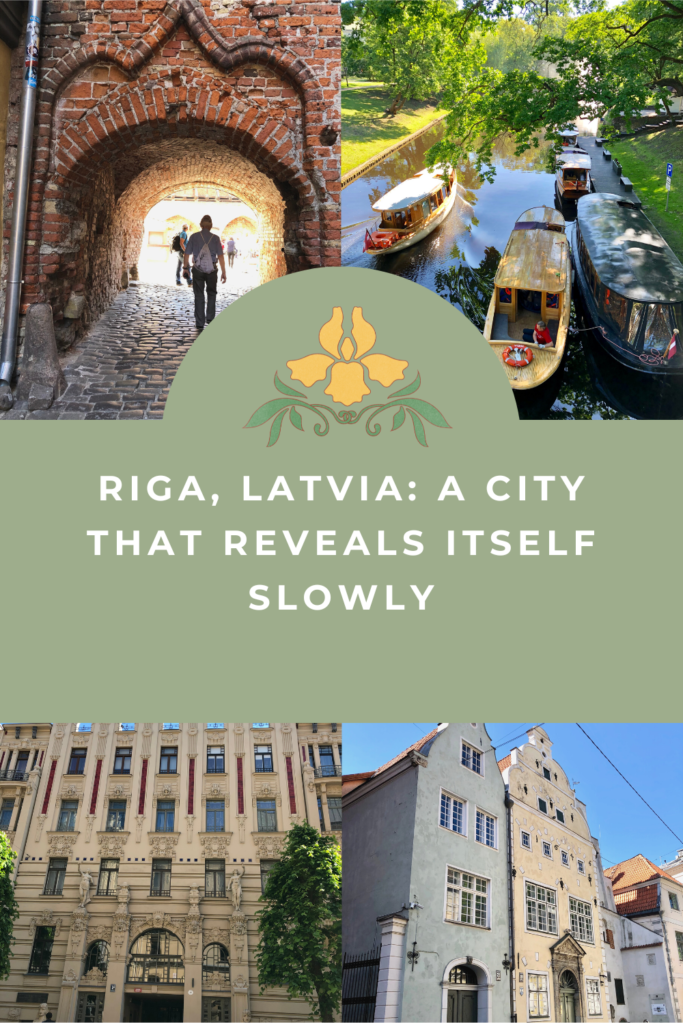
Riga doesn’t arrive all at once.
It doesn’t announce itself with spectacle or scale. Instead, it unfolds street by street, façade by façade, until you realize you’ve been walking through centuries without ever feeling like you were chasing anything.
This is a city that rewards attention.
You look up, and suddenly you’re surrounded by spires.
You turn a corner, and an Art Nouveau building stops you mid-step.
You wander into a market, and the rhythm of daily life pulls you in without explanation.
Riga doesn’t ask to be conquered. It asks to be noticed.
Old Town: Where Riga Speaks First
Riga’s Old Town, Vecrīga, is compact, walkable, and quietly dramatic. Cobblestone streets wind between medieval churches, merchant houses, and open squares that feel lived in rather than preserved.
The Three Brothers
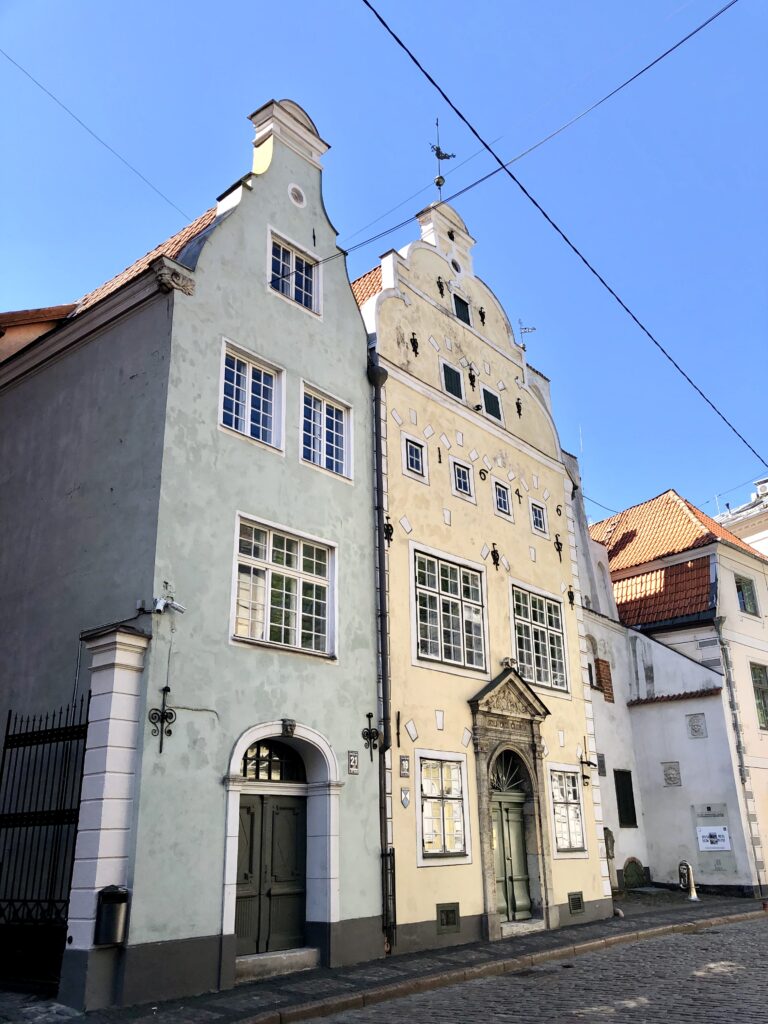
The Three Brothers stand quietly on Mazā Pils iela, a lesson in time told through walls. The pale, stepped-gable house—the oldest—dates back to the 15th century, when Riga was still shaping itself as a Hanseatic city. Its small windows, thick masonry, and almost monastic restraint speak of a medieval life built for endurance rather than display. Together, the three neighboring houses trace Riga’s architectural evolution across centuries, but it’s this oldest brother that holds your gaze longest—unassuming, weathered, and entirely uninterested in modern attention.
St Peter’s Church
If you want to understand Riga’s layout and its temperament, go up the tower of St. Peter’s Church. From above, the city makes sense. Red roofs stretch outward, the Daugava River draws a calm boundary, and the skyline feels balanced rather than imposing.
House of the Blackheads
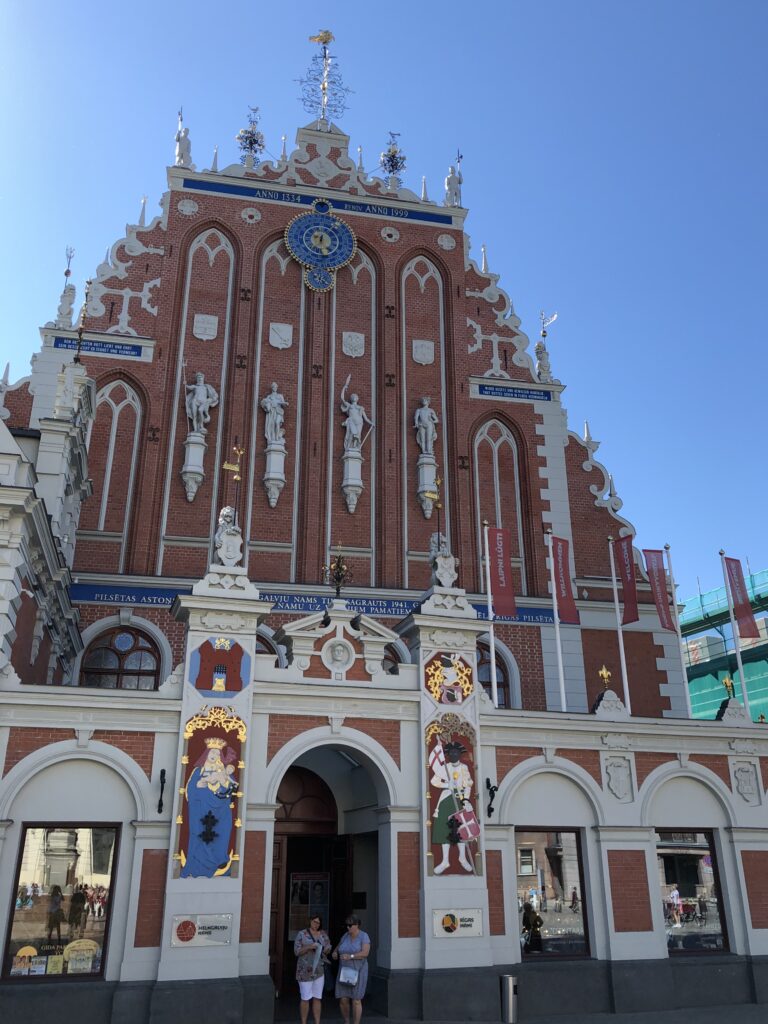
A short walk away, the House of the Blackheads stands unapologetically ornate. Once a guild house for unmarried merchants, today it’s one of Riga’s most recognizable buildings and rightly so.
The façade is theatrical, but the story behind it is practical: trade, ambition, and a city built by people who believed prosperity deserved beauty.
Riga Dome Cathedral
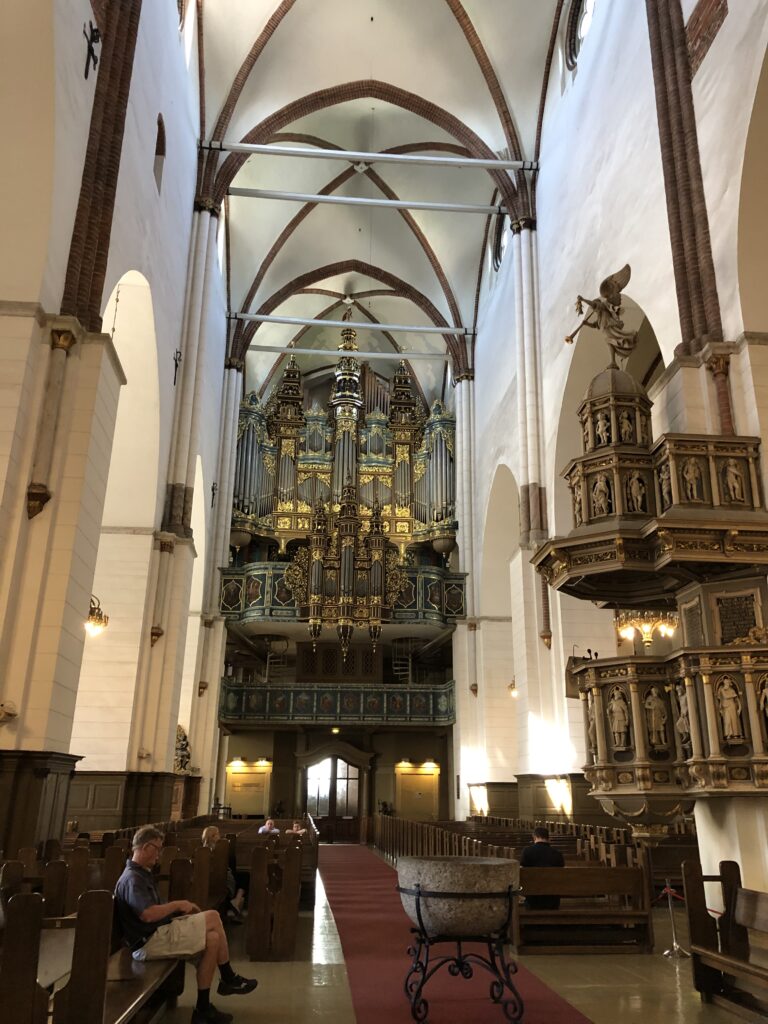
This cathedral anchors Old Town with a quiet authority. Built over centuries and shaped by Romanesque, Gothic, and Baroque influences, it has long been more than a place of worship.
Today, the cathedral is also one of Riga’s most important cultural venues, known internationally for its historic pipe organ, one of the largest in Europe, and its public organ concerts. These performances, held regularly throughout the year and more frequently in warmer months, draw locals and travelers alike, turning the cathedral into a shared listening space where music becomes part of the city’s living rhythm.
Art Nouveau Riga: A City That Looks Up

Riga is one of the great Art Nouveau cities of Europe, yet it rarely appears on the same lists as Paris or Vienna. That’s part of the pleasure.
Walk along Alberta iela or Elizabetes iela and you’ll find buildings covered in faces, curves, florals, and mythological figures. They don’t compete for attention. They simply exist—confident, expressive, and slightly surreal.
The architecture feels imaginative rather than formal, as if the city once decided that everyday life deserved artistry.
Riga Central Market
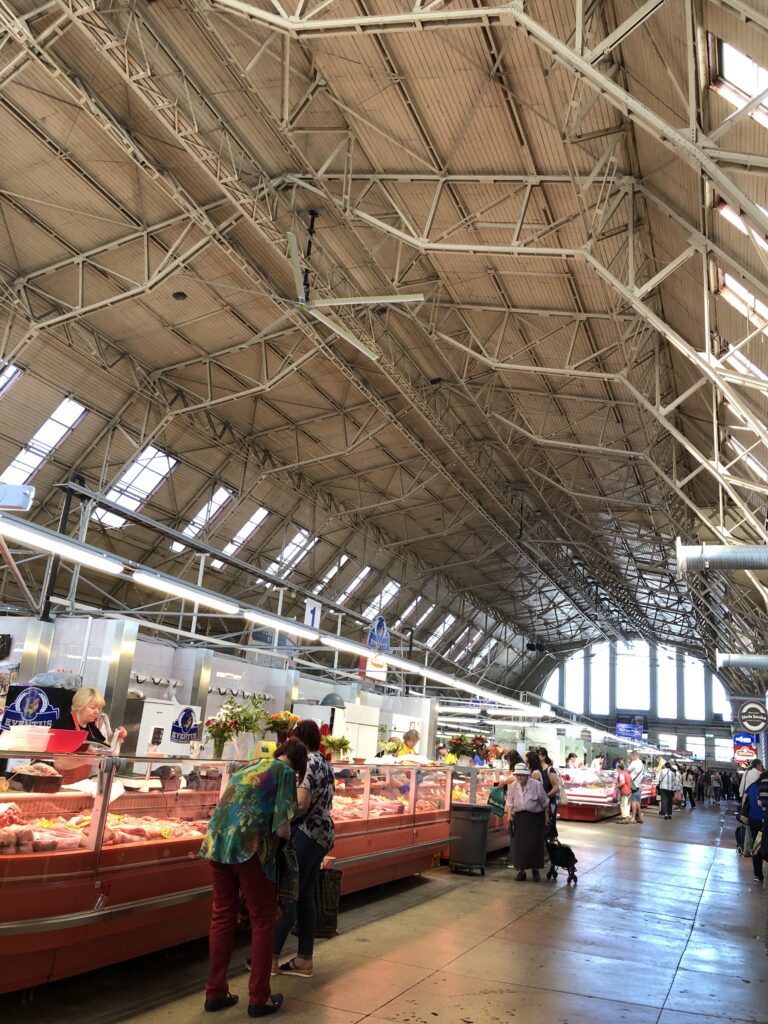
The Central Market is where Riga stops being historical and becomes immediate.
Housed in massive former Zeppelin hangars, it’s one of the largest markets in Europe—and one of the most honest. Locals shop here daily. There’s no performance, no curated narrative.
You’ll find smoked fish, fresh bread, pickled vegetables, berries, honey, flowers, and the quiet choreography of people who know exactly where they’re going.
Spend time here and Riga stops being a destination. It becomes a place.
Where I Stayed: Above the City, Looking In
Radisson Blu Latvija
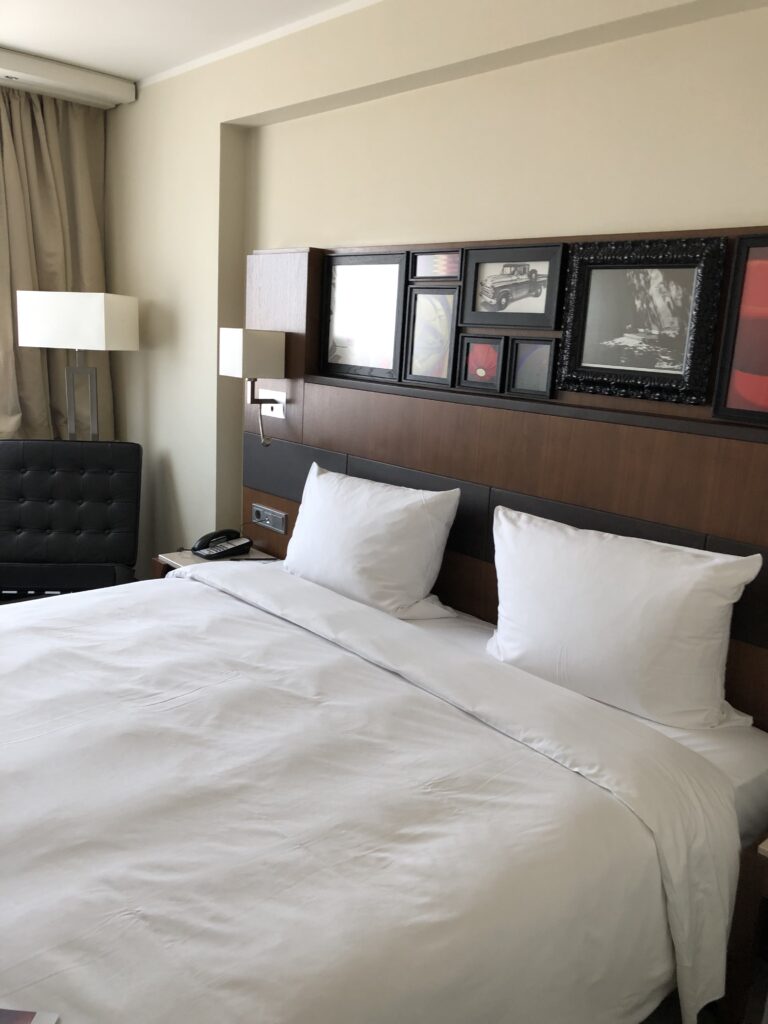
I stayed at the Radisson Blu Latvija, right at the edge of Old Town and the city center—a location that made wandering effortless. Museums, parks, shopping streets, and historic sites all fell naturally into the day without planning.
The hotel itself was clean, comfortable, and understated—exactly what you want when the city is doing most of the talking.
But the real moment happens upstairs.
Skyline Bar

The Skyline Bar located at the Radisson Blu sits high above Riga, wrapped in glass, offering views that change with the light. During the day, the city feels architectural. At night, it becomes intimate—spires lit, streets softened, conversations slowing down.
This isn’t a rooftop for spectacle.
It’s a place to pause.
After long days of walking, I found myself returning here—not to end the day, but to understand it.
Beyond the Postcards
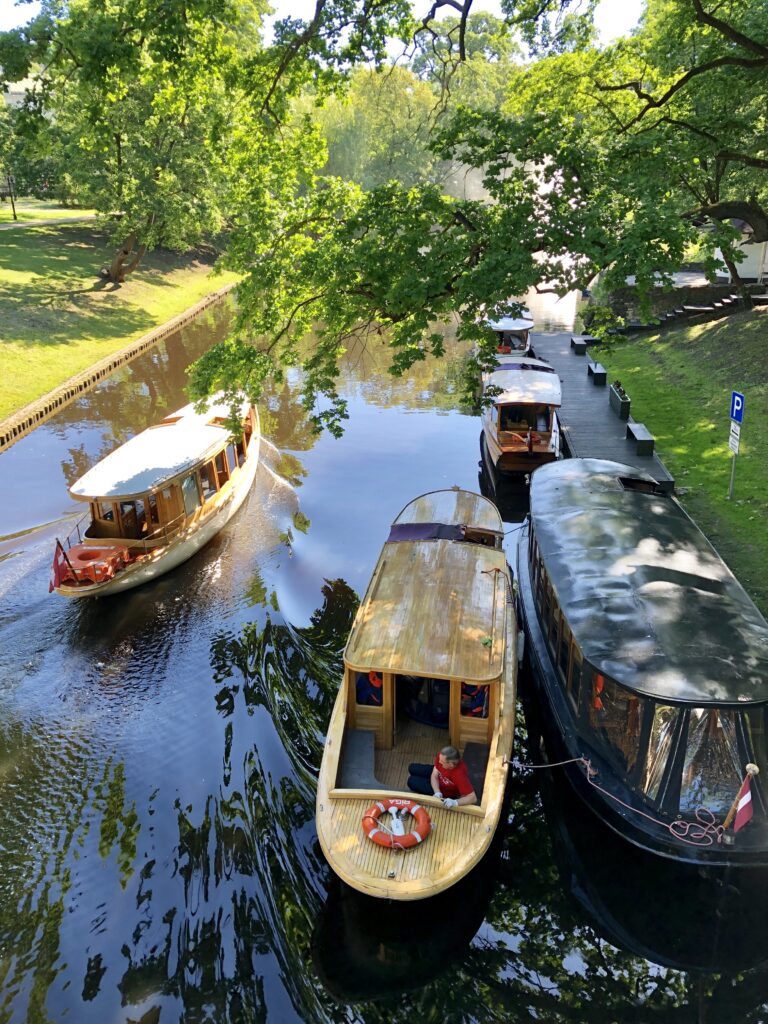
Riga reveals more the longer you stay.
- Bastejkalns Park offers quiet paths along the canal near the city center.
- The Freedom Monument stands as a calm, powerful symbol of independence rather than a dramatic one.
- Across the river, neighborhoods with wooden houses and local markets slow the rhythm even further.
Riga knows when to speak—and when to step back.
Why Riga Lingers
Riga doesn’t overwhelm you with highlights.
It gives you space to discover them.
It’s a city for travelers who enjoy walking without urgency, eating without performance, and learning without being lectured. A place where history feels present, not staged.
Riga stays with you because it never tries to impress you.
It simply lets you in.

Riga in 48 Hours: A Quiet Companion Guide
Day 1
- Walk Old Town without a map
- Climb St. Peter’s Church for perspective
- Explore Town Hall Square and the House of the Blackheads
- Wander Art Nouveau streets near Alberta iela
- Evening drink at Skyline Bar overlooking the city
Day 2
- Morning at Riga Central Market for breakfast and atmosphere
- Visit the Museum of the History of Riga and Navigation or the Latvian War Museum
- Walk through Bastejkalns Park and past the Freedom Monument
- Cross the river for a slower neighborhood stroll
- Dinner back in the city center, unplanned


Leave a Reply
You must be logged in to post a comment.