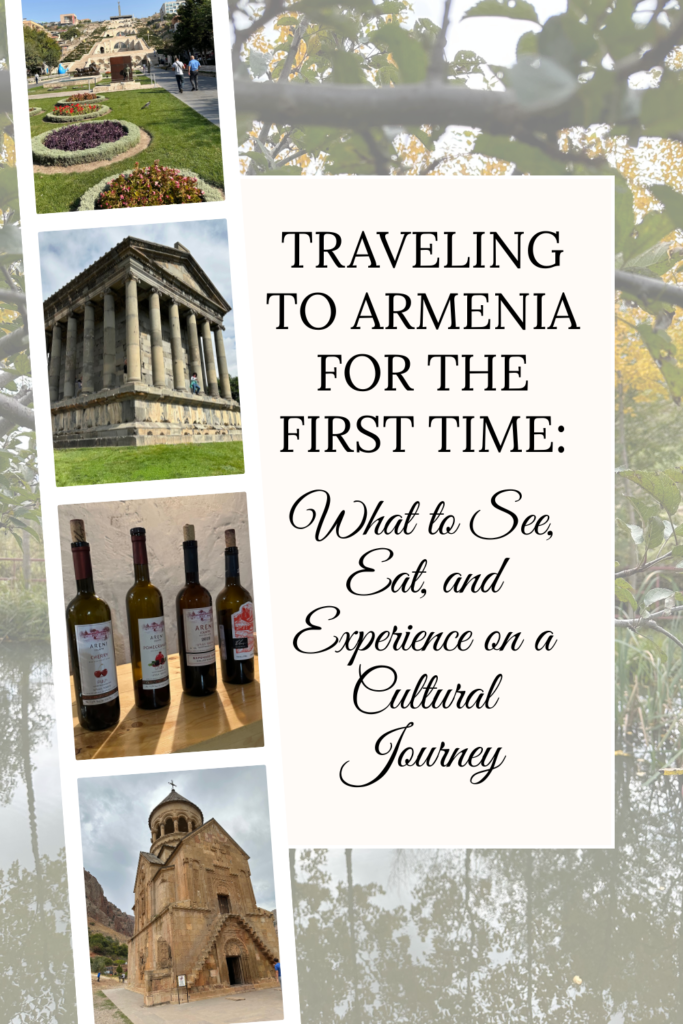
Armenia surprised me—in the best possible way.
Often overlooked on the travel map, Armenia is one of those places that quietly stays with you long after you leave. It’s ancient yet approachable, deeply spiritual yet incredibly warm, and culturally rich without feeling overwhelming. If you’re curious about traveling to Armenia, wondering what it’s really like, or debating whether it belongs on your itinerary through the Caucasus, this guide will answer the questions most travelers have before they go.
This trip was part of a group tour that started in Yerevan, with seamless logistics and thoughtfully planned routes—ideal for first-time visitors to Armenia.
For travelers considering Armenia for the first time, especially as part of a broader Caucasus journey, this is a country that rewards curiosity. It is ancient without feeling frozen in time, deeply spiritual without being imposing, and culturally rich without being exhausting.
This trip was part of a small group tour that started in Yerevan. Georgia and Azerbaijan will follow in future posts, but Armenia deserves its own story.
Arrival in Yerevan and Where We Stayed
We arrived at Yerevan Zvartnots International Airport, Armenia’s main international airport. Immigration was efficient and calm, and we were met immediately for a pre-arranged transfer, which is highly recommended for your first visit.

Our base in Yerevan for four nights was Ani Central Inn, a centrally located, affordable hotel that proved to be an excellent choice. The location made it easy to walk to major attractions, cafés, and markets. The rooms were comfortable, but what stood out most was the front desk. Not polished or scripted, but genuinely helpful and engaged. For travelers who value location, simplicity, and local character over luxury, this hotel works very well.
Yerevan itself is one of the world's oldest continuously inhabited cities, founded in 782 BC. It is older than Rome. Built largely from pink volcanic tufa stone, the city has a warmth that shows up not just in its architecture, but in its rhythm of daily life.
Yerevan’s Key Attractions and Why They Matter
Republic Square forms the heart of the city, surrounded by grand government buildings and museums. In the evenings, locals gather here to watch the fountains, turning the square into a shared living room for the city.
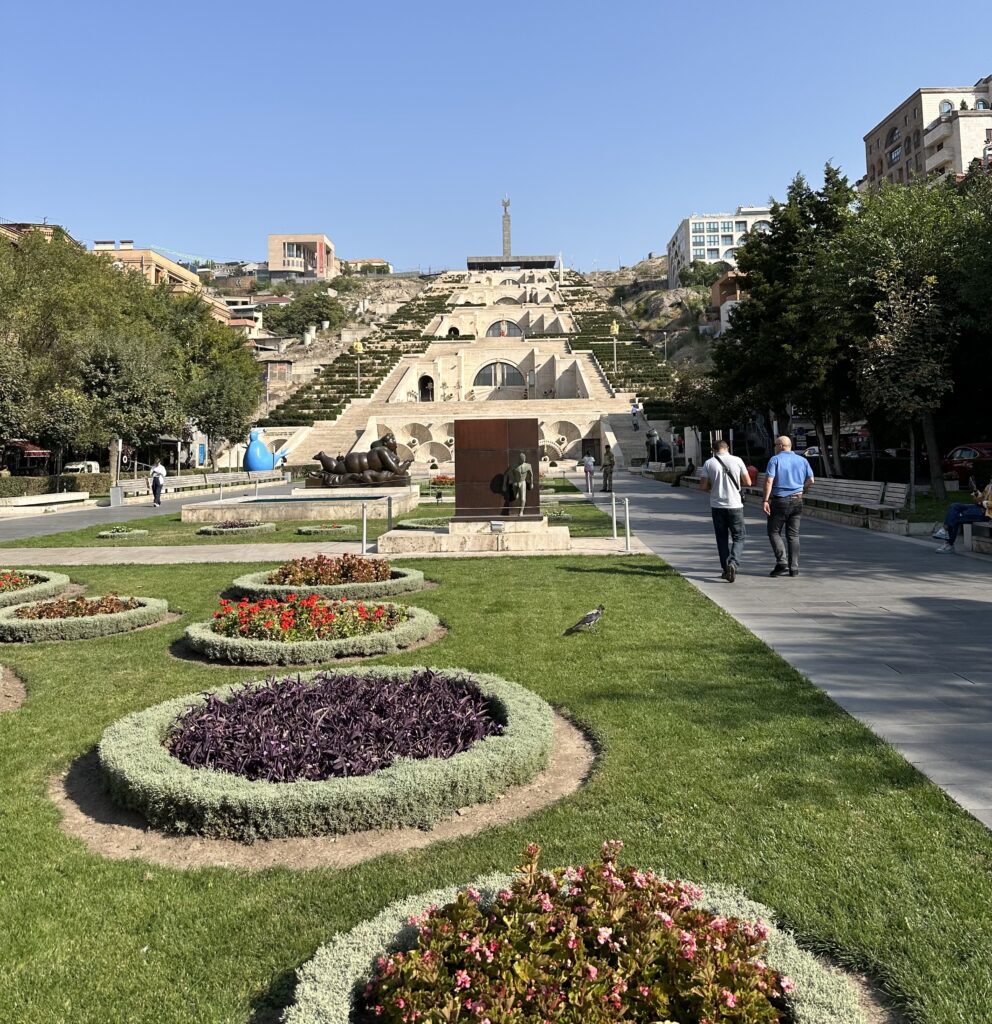
The Cascade Complex and Cafesjian Center for the Arts combines modern art, massive stairways, and sweeping views of Yerevan. On clear days, Mount Ararat dominates the skyline. The contrast between contemporary sculptures and Armenia’s ancient backdrop captures something essential about the country itself.
The Vernissage Market is one of the best places to understand Armenian creativity. It is not just a souvenir stop, but a place where you see traditional crafts, handwoven carpets, silver jewelry, wood carvings, paintings, and even Soviet-era objects that reflect Armenia’s layered history.
A visit to Tsitsernakaberd, the Armenian Genocide Memorial and Museum, adds crucial historical context. The site is solemn without being overwhelming, designed to educate and commemorate with dignity. It deepens your understanding of Armenia’s resilience and identity.
Lavash Bread and Why It Matters So Much
Lavash is not simply Armenia’s most famous bread. It is a symbol of continuity, survival, and family life.
In 2014, lavash was inscribed on UNESCO’s Intangible Cultural Heritage list, recognizing not only the bread itself but the cultural rituals surrounding its preparation and use. Traditionally baked in a tonir, an underground clay oven, lavash is paper-thin yet elastic. It can be dried and stored for months, then rehydrated when needed, which historically made it essential during harsh winters and periods of scarcity.
Lavash appears at nearly every meal in Armenia. It wraps cheese and herbs, accompanies grilled meats, and sometimes replaces utensils altogether. At weddings, it is draped over shoulders as a symbol of abundance and protection. Experiencing Armenia without lavash would be like visiting Italy without bread or France without wine.
Armenian Food in Yerevan
One of the most memorable meals in Yerevan was Armenian khorovats at Artashi Mot, located near the cathedral. Khorovats is Armenia’s signature grilled meat, cooked over open flame and served simply with lavash, herbs, and vegetables. Artashi Mot is casual, unpretentious, and deeply local. The kind of place where food speaks for itself.
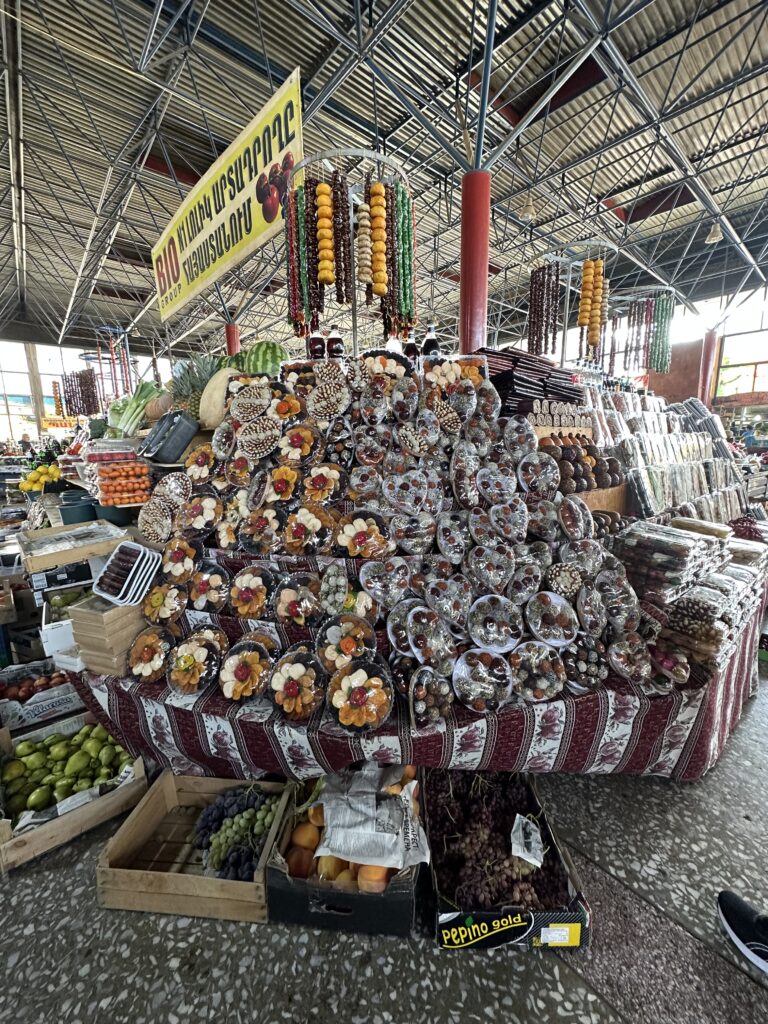
The Gum Market offers a glimpse into everyday Armenian life. Dried fruits, nuts, spices, cheeses, and stacks of lavash fill the stalls. It is not curated for tourists, which makes it one of the most authentic food experiences in the city.
Echmiadzin and Armenia’s Spiritual Center
Armenia was the first country in the world to adopt Christianity as a state religion in 301 AD. That history becomes tangible in Holy Echmiadzin, the spiritual center of the Armenian Apostolic Church.
Often compared in importance to the Vatican, Echmiadzin is believed to be the site where Christ appeared to Saint Gregory the Illuminator. Attending a Sunday liturgy here was a powerful experience, even for those who are not religious. The ritual, music, and atmosphere convey how deeply faith is woven into Armenian identity.
On the return to Yerevan, we stopped at the Zvartnots Temple ruins, a UNESCO World Heritage Site dating back to the 7th century. Even in ruins, its scale and architectural ambition are striking.
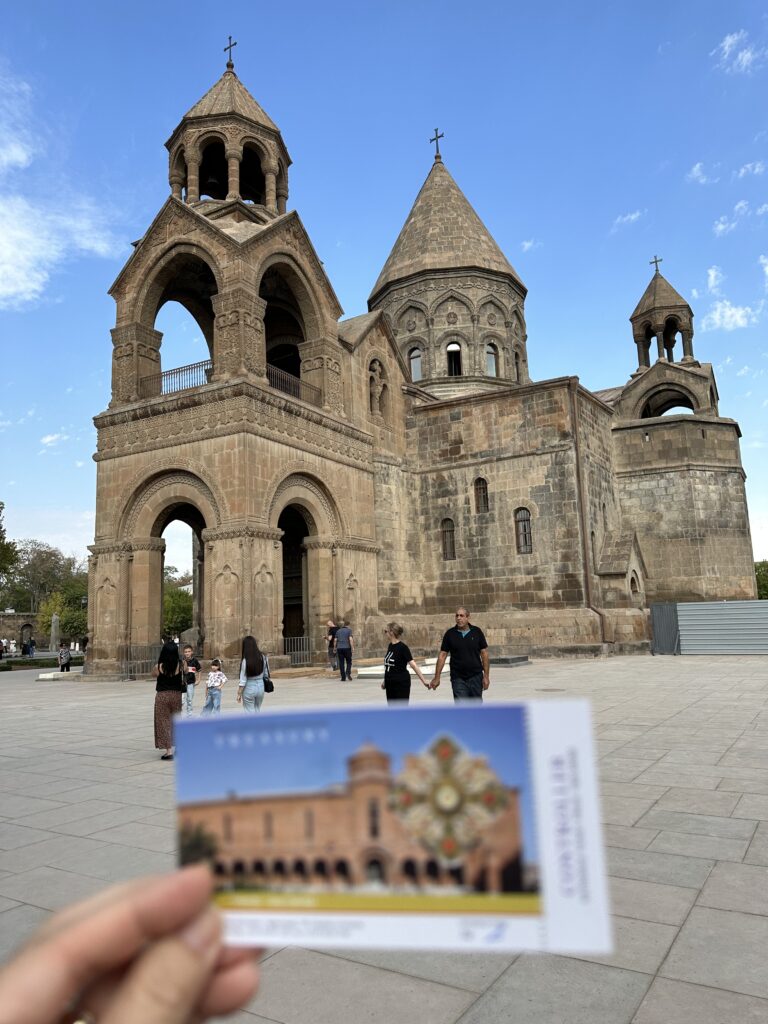
In a country known for some of the world’s oldest churches, Saint Gregory the Illuminator Cathedral feels like a bridge between past and present. It is modern by Armenian standards, yet deeply connected to the same spiritual story that began centuries earlier.
Khor Virap, Mount Ararat, and Sacred Geography
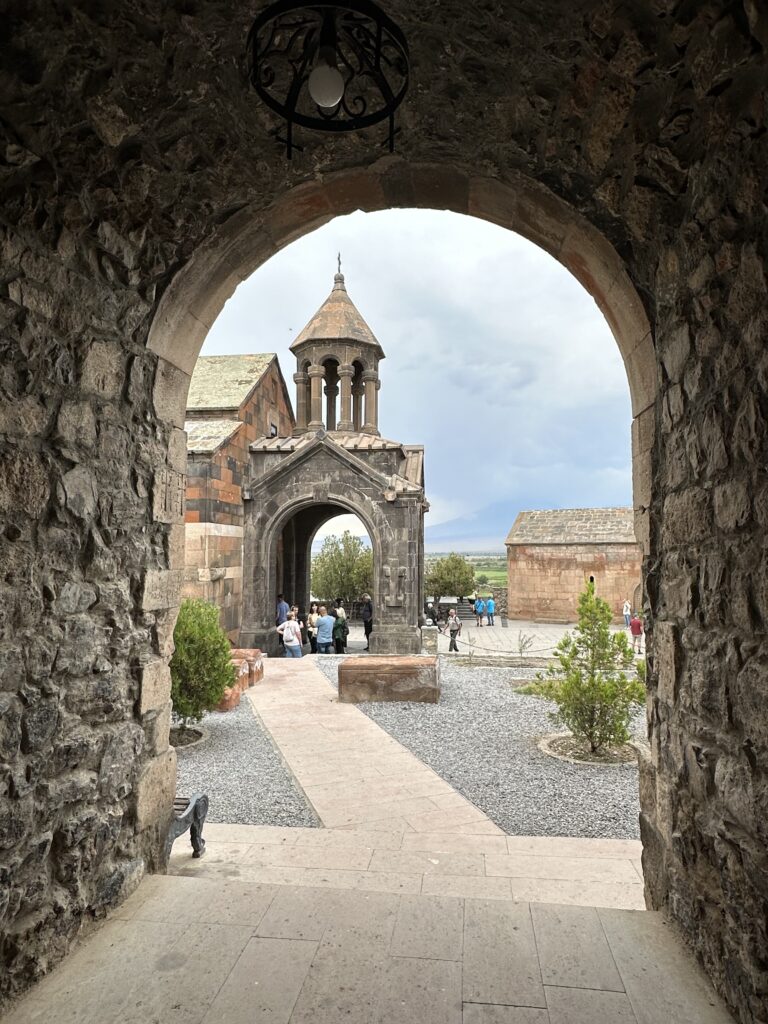
Khor Virap Monastery is one of Armenia’s most iconic sites, not only for its religious significance, but for its location. From here, Mount Ararat rises dramatically in the distance. Though Ararat lies just across the border in modern-day Turkey, it remains Armenia’s most powerful national symbol.

The monastery is tied to Saint Gregory the Illuminator, who was imprisoned here before Christianity became Armenia’s state religion. The setting invites quiet reflection. Many visitors find themselves lingering, simply absorbing the view.
Areni and Armenia’s Ancient Wine Region
Armenia is one of the world's oldest wine-producing regions. This is not marketing language. It is an archaeological fact.
In 2007, researchers discovered the world’s oldest known winery in Areni Cave, dating back more than 6,100 years. The site included a wine press, fermentation vats, storage jars, and drinking vessels.
Areni remains at the heart of Armenian winemaking today. The region is known for indigenous grape varieties, particularly Areni Noir, grown in high-altitude vineyards with volcanic soil. The wines tend to be elegant, balanced, and food-friendly rather than heavy or overly oaked.

Wine tasting in Areni feels intimate and grounded. Wine here is not a trend or a luxury product. It is part of daily life and cultural memory. I really like the Armenian Zorah Karasi (Areni Noir).
Noravank Monastery and the Landscape of Stone
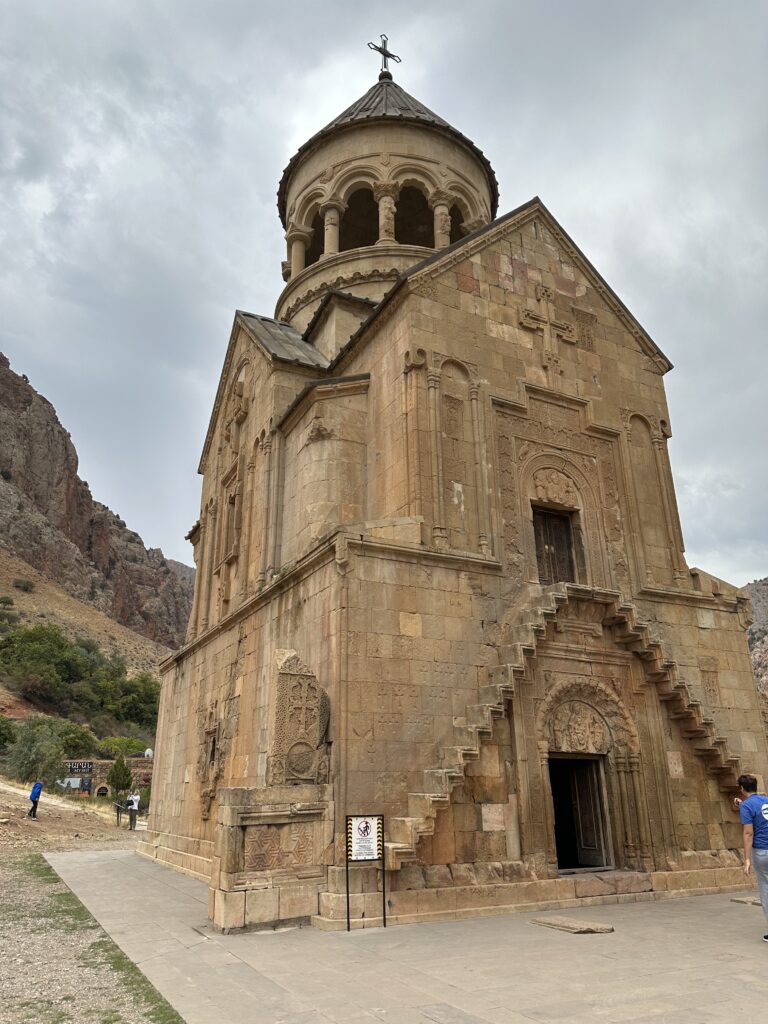
Noravank Monastery sits within a narrow gorge framed by towering red rock cliffs. The monastery dates back to the 13th century and is admired not only for its architecture, but for how seamlessly it fits into the surrounding landscape.
The approach alone is memorable, winding through rock formations that change color with the light. Noravank feels like a place designed to be discovered rather than displayed.
Lake Sevan and Sevanavank Monastery
Lake Sevan sits at nearly 6,233 feet (1,900 meters) above sea level and is one of the largest high-altitude freshwater lakes in the world. The air here is noticeably cooler, and the landscape feels alpine rather than arid.
Overlooking the lake is Sevanavank Monastery, founded in the 9th century. Originally accessible only by boat, the monastery once served as a secluded monastic retreat.
The architecture is intentionally austere, built from dark volcanic stone that contrasts sharply with the blue water of the lake. Inside, the acoustics are extraordinary. Armenian sacred music was composed for spaces like this.
During our visit, we listened to a quartet singing a cappella inside the church. The stone walls amplified the voices in layers, creating a resonance that felt almost otherworldly. The sound lingered in the space long after the singing stopped. This was not an accidental design. It was architecture shaped around sound, silence, and prayer.
Dilijan and Northern Armenia
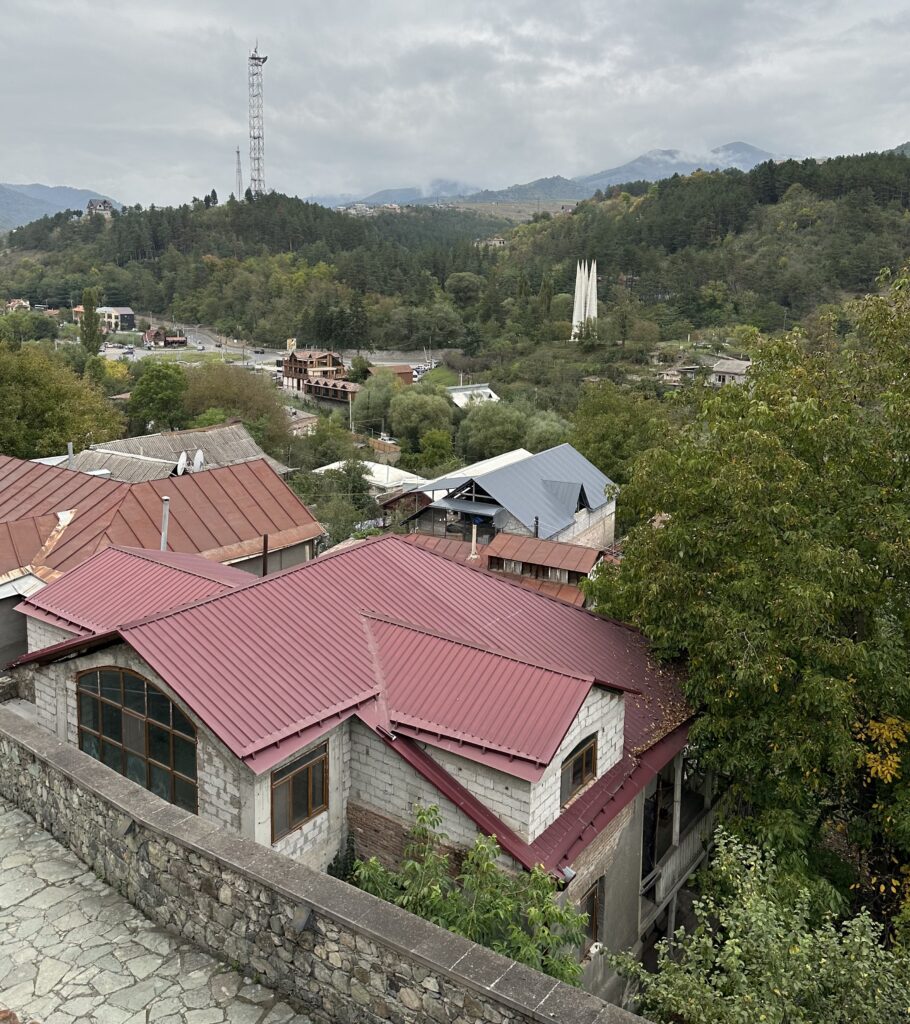
From Lake Sevan, we continued to Dilijan, often called Armenia’s Little Switzerland. Surrounded by forests and rolling hills, Dilijan has a completely different atmosphere from Yerevan.

We stayed at Diligence Hotel and Restaurant, a comfortable and convenient base for exploring the region. Dilijan feels slower, greener, and reflective, a fitting transition before crossing into Georgia.
Fioletovo Village and Crossing into Georgia
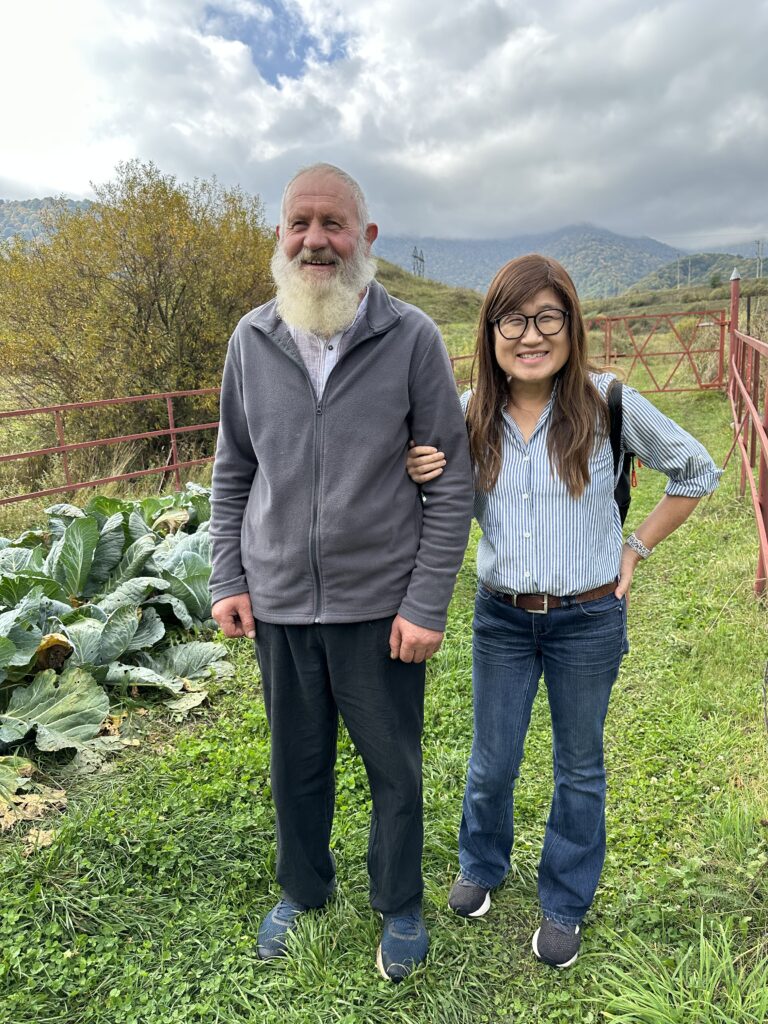
On the way to Georgia, we stopped in Fioletovo, a village founded in 1842 by Russian Molokan exiles. Molokans are a spiritual Christian sect who reject icons, clergy, alcohol, smoking, and pork. Visiting the village offered insight into Armenia’s ethnic and religious diversity, which often goes unnoticed by travelers.
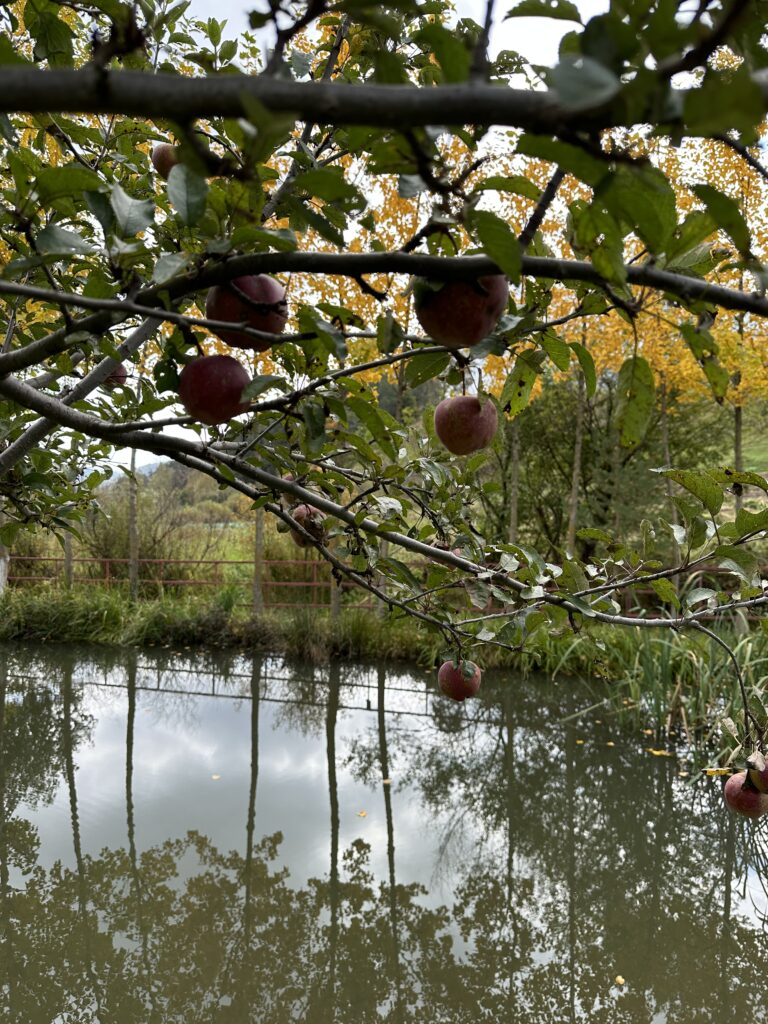
The border crossing into Georgia was smooth and straightforward, something many travelers worry about unnecessarily.
Is Armenia Safe and Worth Visiting?
Armenia felt safe, welcoming, and calm throughout the journey. Locals were curious, proud of their heritage, and generous with their stories.
What makes Armenia fascinating is not only its age, but its continuity. Christianity practiced where it first became a state religion. Wine made where humans first fermented grapes. Bread baked the same way for centuries. Monasteries designed to harmonize with landscape and sound.
This was the first chapter of a journey through the Caucasus. Georgia and Azerbaijan will follow, but Armenia set the foundation. It is a country that stays with you quietly, long after you leave.

Leave a Reply
You must be logged in to post a comment.