• Destinations
    • South America
    • North America
    • Caribbean
    • NYC
    • Asia
    • Europe
    • Siberia
  • Hotel Guide
  • About
  • Resources
  • Contact

Claudia Looi

11 Real Mongolian Foods Not Served Outside of Mongolia

By Claudia Looi 2 Comments

31 May
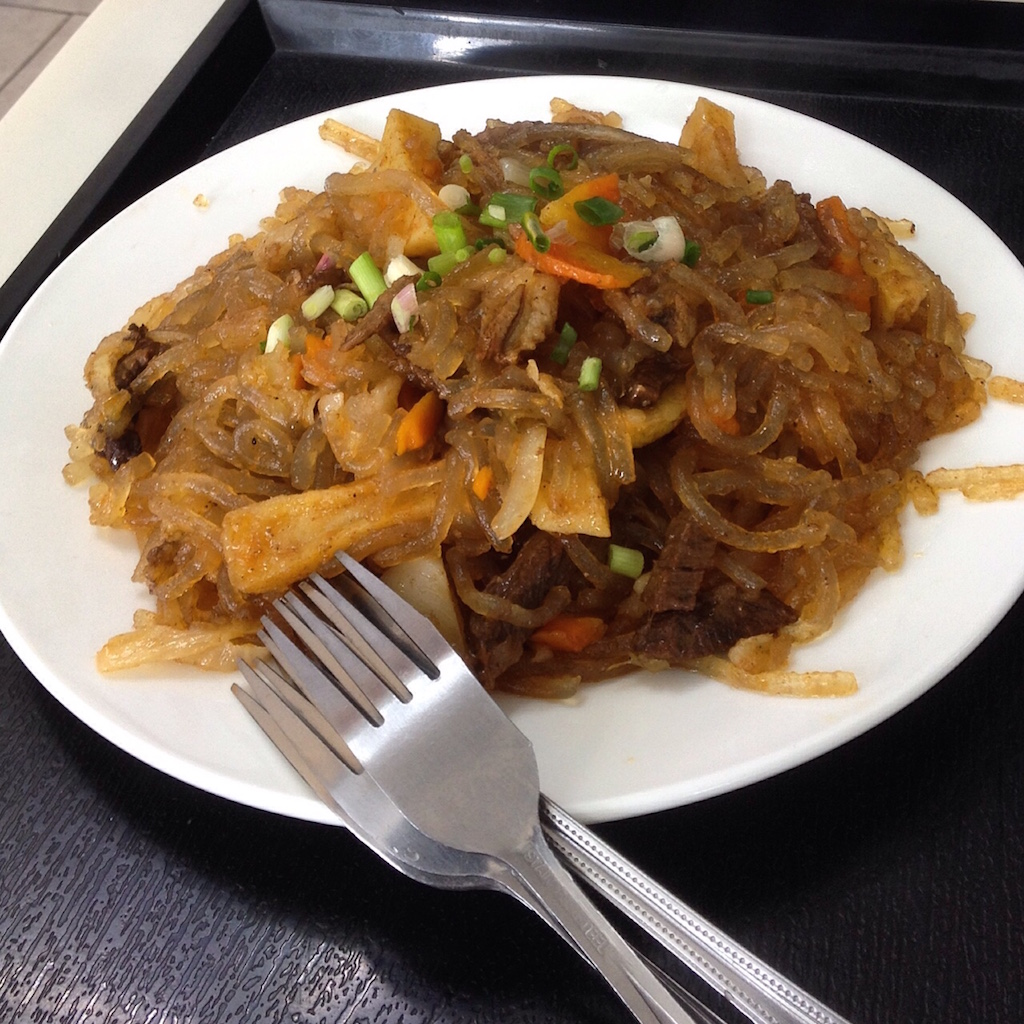
Most delicious noodles in Naran Tuul market, Ulaan Bataar

Most delicious noodles in Naran Tuul market, Ulaan Bataar

I’ve been lied to! I think you too. You and I have bought into the lie when we ordered Mongolian barbecue in an Asian restaurant.

What if I told you that Mongolian barbecue you and I crave for is not the real deal! They are stir-fried meat with vegetables- not the least associated with the real Mongolian barbecue called khorkhog.

Real Mongolian food consists of a few ingredients like salt, carrots, cabbage, onions and potatoes. But there are two constants in the majority of Mongolians' every day food – mutton and flour.

For example four of their most popular every day foods are made of flour, mutton, salt and onions. They are buuz, tsuivan, shul and khuushuur. The only differences is the method of preparing and cooking.

To banish the lie about Mongolian food and to prepare you for the authentic Mongolian food in Mongolia, here are 11 real Mongolian food not served outside of Mongolia.

One: Mongolian barbecue (khorkhog)

Authentic Mongolian barbecue or khorkhog is actually more like stewed mutton with potatoes, carrots and seasonal vegetables. I saw our tour guide make the khorkhog while we chatted in the ger.

IMG_7779Here is a step by step method:

  1. The cut up mutton (with fatty parts included) is marinated in salt and pepper and placed in a metal container.
  2. Start the fire in a wood burning stove. When the fire is flaming hot, place smooth rocks from the river on to the burning stove.
  3. Add the red hot stones one at a time to the container of cut meat.
  4. Place about six to eight rocks (depending on the quantity of meat), add the vegetables and a little water.
  5. Cover the metal container with a lid and place it on the stove.
  6. It takes about an hour to cook the meat and vegetables.
Mongolian authentic khorkhog

Authentic khorkhog and Chinggis vodka

The fat from the mutton produces lots of liquid and grease.

Two: Mongolian fried meat pie (khuushuur)

Mongolian food - khuushuur

khuushuur

Khuushuur is very popular in Mongolia. This fried dough filled with minced mutton, salt and onions is cheap and easy to eat. Sometimes it is served with salad (cabbage) on the side.

Three: Mongolian dumpling (buuz)

Mongolian dumplings, buuz

Buuz (Mongolian dumplings)

The first time I ate buuz was in Listyanka Siberia. It is the same as Mongolian dumpling. Buuz is like Chinese dumplings but the dough is a little thicker. Just Like khuushuur, buuz is made of the same ingredients – flour, minced meat, salt and onions.

It is shaped like a flower and steamed.

Four: Tsuivan noodles

tsuivan - mongolian noodles

Tsuivan

Mongolian Tsuivan noodles

Tsuivan noodles

Tsuivan noodles are tasty compared to the many other dishes made with flour, salt, onions and mutton. The noodles are made of flour and stir fried with bited-sized mutton, onions and salt. Most tsuivan noodles have carrots and cabbage. I had one on the way to the ger camp that added potatoes (French fries).

Five: Meat and vegetables soup (shul)

shul

Shul

Shul is exactly the same as tsuivan except it is cooked in soup instead of stir fried. I had a shul without meat too, suitable for vegans.

Six: Dumpling soup (bansh)

This is the same as buuz but in a smaller version. It is usually served in a soup.

bansh

bansh

Seven: Fried dough (boortsog)

Mongolian Fried dough (boortsog)

Fried dough (boortsog)

I had boortsog served as an appetizer and also during breakfast. They are deep fried thin dough pieces cut in triangular and rectangular shapes.

Eight: Hard cheese (aaruul) and other homemade cheeses

Mongolian homemade cheese and butter

Mongolian homemade cheese and butter

Since aaruul is hard, most people suck on it. I had a little piece at a nomadic family’s ger. The lady offered a generous serving of aaruul, urum (clotted cream) and eezgii (some type of cheese). These homemade cheeses and creams were delicious.

Nine: Mongolian milk tea (suutei tsai)

Mongolian milk tea

Mongolian milk tea

Mongolian milk tea has a hint of black tea. It didn’t taste like tea at all. Suutei tsai is salted milk served in a bowl.

Ten: Boodog

I didn’t try boodog. Boodog is another type Mongolian barbecue where instead of cutting up the meat they barbecue the whole animal including the limbs and head. It has the same ingredients as khorkhog.

Mongolian traditional dish

Mongolian traditional dish

The closest I got to try the boodog is at Modern Nomad restaurant. Here we had the popular “Head of Herd” where the snout, tongue, lamb cheek, eyes and other animal parts are served in a lamb’s skull.

Eleven: Fermented horse milk (airag)

airag- Mongolian fermented horse milk

My cup of airag- Mongolian fermented horse milk

This was the drink I looked forward to trying before arriving in Mongolia. The fact that I got to try it in a nomadic family’s ger is more than I could ask for. Our tour guide Amran and tour leader Erik were warning me that by the end of September I’ll be very lucky if I could find a nomadic family offering strangers airag.

Not only did I try the airag, the man of the house offered half a cup. He was generous to let us try his prized possession since summer was coming to an end and he had half a container left. It was like serving strangers with your prized wine.

airag container

Airag container

To be precise, airag is a fermented mare’s (female horse) milk.

Food is an important part of the Mongolian culture. To show their hospitality Mongolian families usually serve a bowl of homemade cheeses with homemade dough or store bought bread to guests.

There you have the list of 11 foods in Mongolia. What you and I were served outside of Mongolia is not Mongolian food. What do you think?

Filed Under: Asia/Asia Pacific, Travel Tips Tagged With: Asia, food, Mongolia

« Things to Do and See in a Mongolian Ger Camp
The Black Market – Naran Tuul Market in Ulaan Bataar Mongolia »

Comments

  1. Sharon O'Day says

    June 1, 2015 at 9:46 am

    Claudia, this was such an eye-opener! Granted, the ingredients list was pretty limited, but I would imagine the different cooking methods would add totally different textures to each dish. (I have to admit: I'd draw the line at boodog, too.) Happy travels and happy eating!

    Log in to Reply
    • Claudia Looi says

      June 2, 2015 at 1:10 pm

      There's a reason they are called "boodog" 🙂

      Log in to Reply

Leave a Reply Cancel reply

You must be logged in to post a comment.

Search

Travel Makeup Mirror

https://travelwritingpro.com/wp-content/uploads/2025/08/0821.mp4

Get Your Travel Makeup Mirror Here

Makeup Eraser

https://travelwritingpro.com/wp-content/uploads/2025/08/0821-1.mp4

Get Your Makeup Eraser Here

travelwritingpro

Helping you plan, pack & explore with confidence
Firsthand travel tips, destination insights & useful finds
104 countries explored 🌍

Looking for things to do at night in Salvador, Bra Looking for things to do at night in Salvador, Brazil? Spend an evening watching the Balé Folclórico da Bahia in Pelourinho.

Live drumming, singing, and dance bring Bahia’s Afro-Brazilian heritage to the stage. Between exploring the historic streets and trying the local food, this is another way to experience Salvador.

📍 Teatro Miguel Santana
Rua Maciel de Baixo, 49, Pelourinho
🗓 Monday, Wednesday, and Friday at 7 p.m.
🎟 We paid R$120 per person.

My tip: ask your hotel to confirm the schedule and current price and book your tickets for you.

Who would you bring to this show? Send them this for your Salvador itinerary.

#SalvadorBrazil #SalvadorBahia #Pelourinho #BrazilTravel #globetrotter100club
You’ll notice these colorful ribbons all over Salv You’ll notice these colorful ribbons all over Salvador, Brazil. But what do they mean?

They’re called fitinhas do Bonfim, symbols of faith, hope, and devotion associated with Bonfim Church. The tradition is to tie one around your wrist with three knots, making a wish with each knot.

At the church, they cover the fence in waves of color. But you’ll find them beyond the church, too.

At my hotel, a staff member gave me a handful in different colors. Another hotel used them to tie the bath towels and hand towels, adding a little touch of Salvador to the room.

That’s what makes these ribbons such a memorable symbol of the city. You encounter them as an expression of faith, a welcome, and a detail woven into your stay.

📍 Igreja do Senhor do Bonfim, Salvador, Bahia.

Have you brought one home from Brazil?

#SalvadorBrazil #SalvadorBahia #BonfimChurch #BrazilTravel #globetrotter100club
Before booking a beach stay in Salvador, check mor Before booking a beach stay in Salvador, check more than the ocean view. Find out how you actually get onto the beach.

I stayed at Mercure Rio Vermelho, where the swimming pool was amazing. I could see the water, but the easy beach access I had pictured wasn’t part of my experience.

The hotel was okay for a short stay. For a longer trip focused on beach time, I would choose somewhere else with direct beach access and more of a resort atmosphere.

My tip: check the walking route from the hotel to an accessible beach before you book. A waterfront location doesn’t tell you the whole story.

Save this for your Brazil trip, and share it with your travel partner. Would you choose a beautiful pool or direct beach access?

#SalvadorBahia #BrazilTravelTips #RioVermelho #BeachVacation #globetrotter100club
I didn’t know this library existed until I saw it I didn’t know this library existed until I saw it on Instagram while planning this Rio trip. Then I had to see it for myself.

Some call it a hidden gem. The Real Gabinete Português de Leitura, or Royal Portuguese Reading Room, is considered one of the most beautiful libraries in the world. Once inside, you understand why.

Its story began in 1837, when 43 Portuguese immigrants founded a library to promote learning and Portuguese culture in Brazil.

The present building opened in 1887, inaugurated by Princess Isabel. Designed in Portugal’s ornate Neo-Manueline style, it even has a limestone façade brought from Portugal.

Inside, towering bookshelves, intricate ironwork, and a stained-glass skylight compete for your attention. Take your time and remember to look up.

Planning a visit? Here’s what to know:

📍 Rua Luís de Camões, 30, Centro, Rio de Janeiro, near Praça Tiradentes.

🎟️ Regular admission is free.

🕙 Monday through Friday, 10 a.m. to 5 p.m. Check holiday closures before going.

🚇 Take the metro to Uruguaiana, then walk to the library. For less navigating, take a taxi or rideshare directly to the address.

I found it difficult to locate, and some streets along our walking route made me uncomfortable. My recommendation: visit during the day, go with a companion or group, and plan your route beforehand.

There was a long line outside when we visited. Allow time to wait, then give yourself time to appreciate the interior. For me, it was worth it.

Save this for your Rio trip. Have you ever discovered a place on Instagram that you just had to visit?

#RealGabinetePortuguesDeLeitura #RioDeJaneiro #BeautifulLibraries #BrazilTravelTips #globetrotter100club
Follow on Instagram

Copyright © 2025 Claudia Looi